
Guide overview: Plastic extrusion and injection molding are both common plastic manufacturing processes, but they solve different product problems. Extrusion is usually used for long continuous shapes with the same cross-section. Injection molding is usually used for three-dimensional parts that need a mold cavity, repeatable shape, and stable assembly fit.
For buyers, choosing the wrong process can create unnecessary tooling cost, weak product structure, poor tolerance, or a design that is difficult to manufacture. This guide explains the practical differences so OEM buyers can decide whether a part should be extruded, injection molded, or reviewed as a combined project.
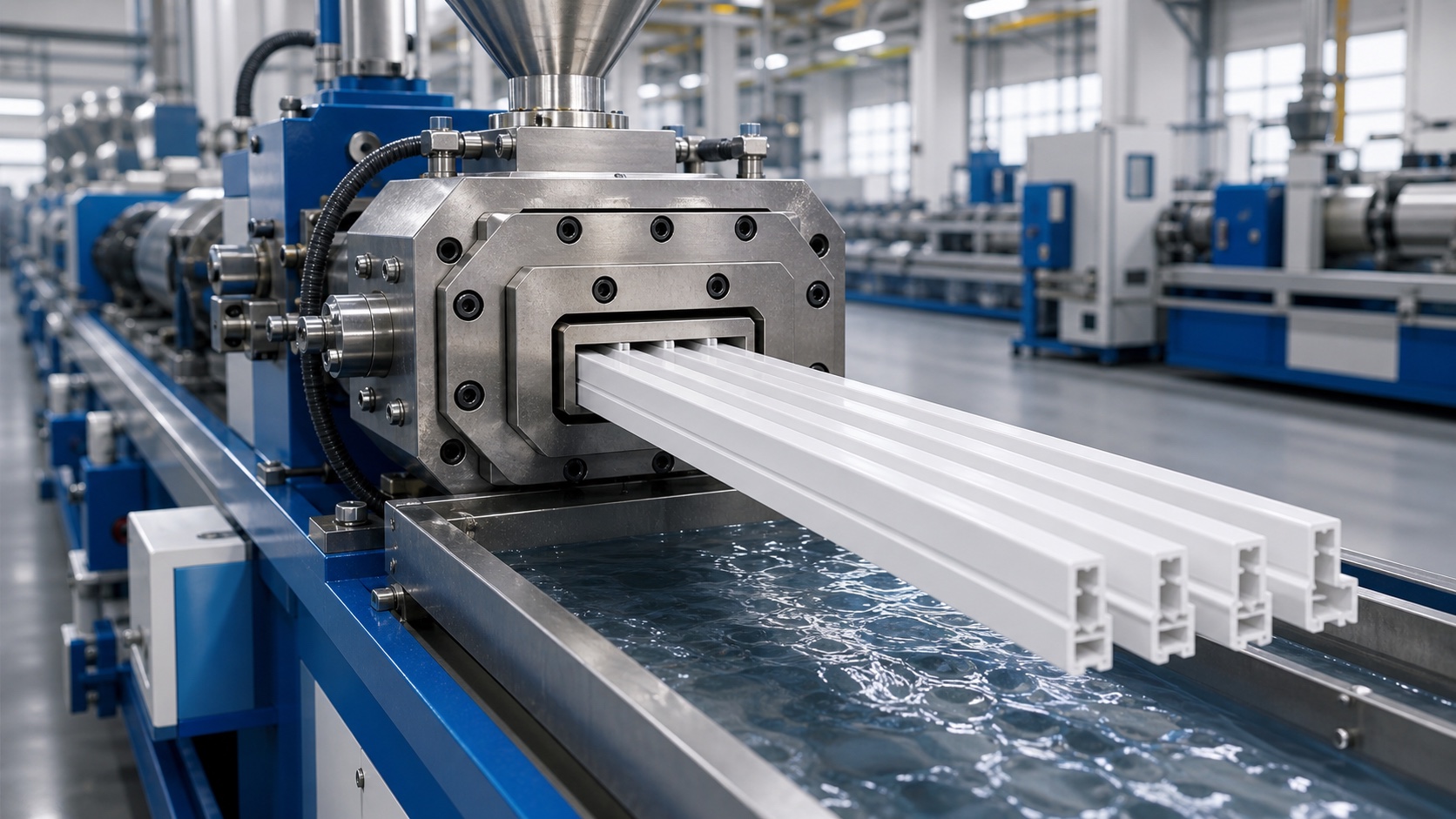
How Plastic Extrusion Works
Plastic extrusion melts resin and pushes it through a die. The die creates a continuous cross-section. After the profile exits the die, it is cooled, sized, pulled, cut, coiled, printed, punched, or packed depending on the product. Extrusion is well suited for PVC profiles, sealing strips, tubing, cable covers, trunking, edge trims, rigid channels, flexible profiles, and many long plastic parts.
The key feature is the cross-section. If the cross-section stays the same along the product length, extrusion is often the most efficient process. Length can usually be adjusted by cutting. The die cost is typically lower than a complex injection mold, and production can be efficient once the material formula and die are stable.
How Injection Molding Is Different
Injection molding forms a part inside a mold cavity. It is better for parts that have three-dimensional features, bosses, clips, holes, curved surfaces, ribs, mounting points, or complex geometry that cannot be made as a continuous profile. Typical examples include plastic housings, brackets, caps, handles, covers, fittings, trays, and custom assembly components.
Injection molding usually needs higher tooling investment than extrusion, but it gives more control over a finished 3D part. It can produce consistent parts at scale when the mold, material, gate, cooling, and machine are matched correctly.

Shape Is The First Decision
The fastest way to compare the two processes is to look at the product shape. A profile with one continuous cross-section usually points toward extrusion. A shaped part with different features in different areas usually points toward injection molding. For example, a PVC cable channel, refrigerator gasket, clear tube, or edge trim is usually extrusion. A plastic equipment housing, clip, cap, bracket, or custom enclosure is usually injection molding.
Some products need both processes. An appliance assembly may use extruded gaskets and injection molded corners or brackets. A packaging system may use extruded rails and molded end caps. In these cases, the supplier should review the product as a system, not as isolated parts.
Tooling, MOQ, and Cost Differences
Extrusion tooling is usually a die. Cost depends on profile complexity, material, tolerance, and whether calibration or downstream fixtures are needed. MOQ often depends on material color, compound setup, profile size, production setup, and packing. For PVC extrusion, formula control is important because hardness, flexibility, color, and processing stability affect the finished part.
Injection molding tooling is usually more complex. Mold cost depends on part size, cavity number, sliders, inserts, surface requirement, cooling, steel choice, and production volume. MOQ may be higher when the part requires a full production setup, special material, color matching, or secondary processing.
The lower tooling cost is not always the better choice. A product should use the process that matches the shape and function. Forcing a 3D part into extrusion or forcing a continuous profile into injection molding can create higher long-term cost.
Material and Tolerance Considerations
Extrusion materials include PVC, UPVC, TPE, TPV, PE, PP, nylon, and other plastics depending on the product. Material behavior affects die swell, shrinkage, surface finish, hardness, flexibility, and cut quality. Tolerance is usually reviewed on key cross-section dimensions, not every surface equally.
Injection molding materials include ABS, PP, PE, PC, POM, PA, TPE, and filled grades. Shrinkage, warpage, gate marks, and cooling affect final dimensions. Tolerance should be assigned to dimensions that matter for assembly, sealing, or function.
How Buyers Should Choose
Choose extrusion when the product is a long profile, tube, strip, cover, trunking, seal, or channel with a repeated cross-section. Choose injection molding when the product needs a molded 3D form, bosses, ribs, clips, holes, or assembly features. If the product combines both, ask for a process review before separating suppliers.
Next step: Send drawings, cross-section samples, product photos, material target, length, quantity, tolerance points, and application details. Jizon can review whether extrusion, injection molding, or a combined production route is the better fit before quotation.